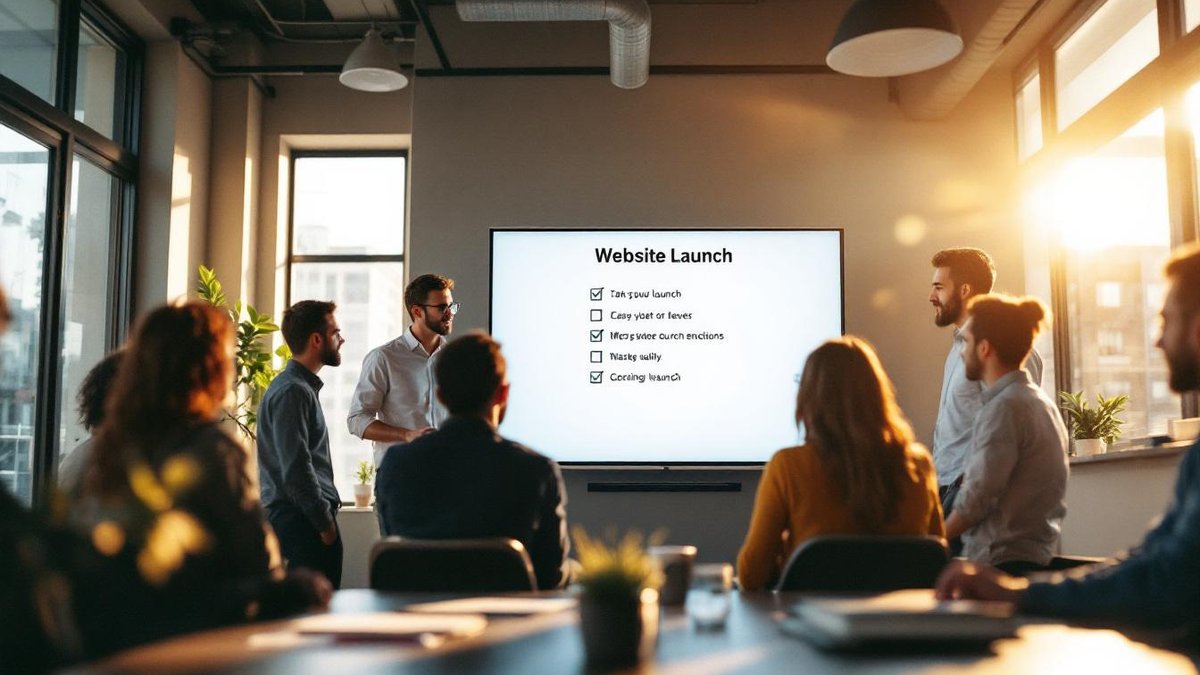
Skip the pre-launch checklist and you will almost certainly regret it. We catch the issues most teams miss before a site ever goes live, and working with clients right here in The Woodlands, TX means we know the local stakes. Launch day should feel like a relief, not a fire drill.

Launching a website is a lot like opening a shop. You wouldn't unlock the front door with a broken sign and half the shelves bare, so don't push a site live with dead links and placeholder copy still parked in your hero section. We walk our clients through every step first, because the problems you skip in pre-launch don't vanish, they just show up in front of real visitors instead. Sound familiar? That's what we fix.
Content review is where sloppy copy, broken links, and weak keywords get caught before real users do. We read everything, check every link, and make sure the language actually works for search, not just for the person who wrote it.
Start with the words. Every sentence on your site is either doing a job or getting in the way, and leftover template text is pretty much the worst first impression a homepage can make. Read every page out loud. Fix the typos, pull the filler, and click every single link, because a 404 on your contact page costs you a lead you'll never even know you lost.
Images and video count as content too. An uncompressed hero image quietly tanks your load time while you sit there wondering why your bounce rate looks rough. Compress every file before launch, all of them. We see this constantly with local service businesses in Spring and Conroe, gorgeous photography, zero optimization, and Google quietly docking them for it.
Here's the thing nobody says out loud. A Woodlands bakery with keyword-rich product descriptions will outrank a competitor running a prettier site with lazy copy. Target phrases your actual neighbors type into Google, stuff like "artisan bread The Woodlands" or "pastries near Houston," and a content refresh turns into real foot traffic. We're not inventing magic. We're doing the work most shops skip.
Tone matters more than people admit. A law firm in Houston and a tutoring platform for high schoolers are both "professional," and they sound nothing alike (good, they shouldn't). Get the voice wrong and even accurate copy reads as off. Your audience feels it before they can name it.
Calls to action do the actual converting. "Learn More" gives a visitor nothing to grab onto, but specific language tied to a specific outcome, "Book your free consult" or "Get your first class free," moves people. A gym and a software company need totally different CTA copy, and figuring out which words fit your offer is worth real time before launch, not after.
Your site's design is the first impression. Make it useful. People decide in seconds whether to stay or bail, so the layout has to get out of their way and point them at what they came for. Navigation should be obvious, not clever. And test everything on a phone, a tablet, a desktop before you hit publish, because responsive design stopped being optional a long time ago.
Pick your colors and fonts to match your brand, then hold the line on them (consistency is how you build trust without ever saying the word trust). Too many typefaces or a chaotic palette overwhelm people fast. Simple beats complicated almost every time. Pick a direction and commit.
One Houston e-commerce shop we've followed cleaned things up, stripped the layout back, swapped in sharper product photos, and made navigation dead simple. Conversions went up. Customers could actually find what they came for, and that showed up directly in sales numbers.
Accessibility isn't a checkbox. It's the work. Alt text, keyboard navigation, screen reader compatibility, these things either exist on your site or they don't. A real estate firm in Spring went back and fixed their accessibility gaps, and the response from users with disabilities was immediate and positive. That's what good design does quietly, without announcing itself.
Just consistent. Always.
Chatbots are worth it (especially for businesses fielding the same five questions every day). A Conroe tech company added one to handle routine inquiries and took real pressure off their customer service team, cutting response times without adding headcount.
Test everything. Forms, buttons, interactive elements, all of it, before a single visitor lands on the page. A broken form doesn't just frustrate people, it kills leads silently, and you won't even know it's happening. We see this constantly with local service businesses. Keep plugins and scripts current too, because outdated tools hand attackers a door you didn't know you left open.
Speed is part of the deal. People in The Woodlands, Houston, Spring, and Conroe are not waiting around for a slow site to load, they're gone in three seconds and on a competitor's page (Google AdSense). Run Google PageSpeed Insights, fix what it flags, and don't treat it as optional. Slow loading hurts rankings and conversions at the same time (Tooltester).
Sound familiar? A local service provider in Spring watched their online inquiries drop and had no idea why. Testing uncovered a form error that was quietly blocking submissions. They fixed it, inquiries bounced back up within a month. One broken field. That's how fragile an otherwise solid site can be.
Cross-browser testing matters more than people expect. A tech startup in Houston had a site that looked great in Chrome and fell apart in Safari. Misaligned elements, broken layouts, the kind of thing that makes a business look unfinished. Testing caught all of it. Fixing those issues meant the experience held up no matter how someone arrived.
Load testing is how you avoid learning the hard way. A retail site in The Woodlands ran load tests before a major sale event, spotted the server capacity ceiling early, and made the fixes. Peak traffic hit, nothing crashed. That's the entire point of testing before the stakes are real.
Here's the thing nobody says out loud: optimizing just the homepage and ignoring the rest is how businesses disappear in search results. Every page needs meta tags, image alt texts, and structured data, because search engines are reading all of it, not just your front door.

Install Google Analytics before launch, not two months after when you're already wondering why you have no idea what's working. It shows you where users go, where they drop off, and what's actually pulling its weight. We've watched businesses set it up and never look at it again, then act surprised when they can't explain their own traffic.
A real estate agency in Conroe started actually using their Analytics data on property listings. They figured out which listings drew traffic and which ones sat ignored, adjusted how they were promoting things, and saw inquiries climb. The data was sitting there the whole time, they just finally looked at it.
Google Search Console catches the stuff Analytics quietly skips over. Crawl errors, mobile usability problems, search performance issues that never surface on their own. We worked with a small Woodlands business that had no clue mobile usability flags were strangling their mobile traffic. They fixed the issues, traffic climbed, and that one audit paid for itself many times over.
Conversion tracking ties your ad spend to something real. Without it? You're flying blind. A Houston event planning company we know started watching which campaigns actually produced bookings, they cut the waste, they doubled down on what worked, and bookings grew. Tracking won't do the work for you. It just shows you where the work needs to happen.
That's the whole game.
Security isn't a nice-to-have you bolt on later, it's the thing standing between your users' data and the people who want it. We build those protections in before launch, not after something goes wrong.
Every site we build gets an SSL certificate on day one. Full stop. It encrypts the data moving between your site and your visitors, and without it you're handing sensitive information around in plain text. But a certificate is table stakes, not a finish line. Plugins and software go stale fast, outdated versions are practically an open invitation, so we keep everything updated on a real schedule, not whenever someone happens to remember.
Here's the thing nobody says out loud: weak passwords undo everything else. Strong password requirements and two-factor authentication close a gap most businesses ignore until it bites them, and by then the damage is done. And backups (current, tested, actually restorable ones) are your last line of defense. Something breaks and you've got a solid backup? You're back up in hours. Without one, you're starting from scratch.
A Woodlands financial advisor learned this the hard way after a minor breach rattled client relationships. They tightened protocols, got real backups running, added two-factor authentication across the board. No incidents since, and the client trust came back. Sound familiar? We see this pattern constantly with local service businesses who treat security as an afterthought.
A Web Application Firewall belongs in your stack earlier than most people think. It sits in front of your site and stops common attacks like SQL injection before they ever touch your data. A Houston e-commerce client added one and watched breach attempts drop sharply almost overnight. Honestly, at this point it's just expected. Not some advanced precaution reserved for the big companies.
Run security audits quarterly. Vulnerabilities don't announce themselves, you go looking or you find out the expensive way. A healthcare provider in Spring baked quarterly audits into their standard operations, stayed compliant, kept patient data protected. Catching a problem in an audit costs a fraction of what it costs after something already broke.
Privacy policies, terms of service, accessibility standards, they aren't just legal boxes to tick. Getting them right protects your users and keeps your business on solid ground from day one.
Your site runs on a privacy policy and terms of service, not because lawyers say so but because they define the relationship between you and your users. And following Web Content Accessibility Guidelines matters too. A site that shuts out people with disabilities isn't just legal exposure, it's a design failure, and we don't build sites that way. That kind of shortcut shows up later as a much bigger problem (usually right when you can least afford it).
Use licensed or original content. Every image, every line of copy. Intellectual property disputes are expensive, slow, and completely avoidable. Sorting out the rights upfront costs a fraction of fighting about it later, and your reputation doesn't take the hit either.
A Houston nonprofit worked through WCAG standards line by line, not because anyone forced them to, but because they actually wanted their site to work for everyone who showed up. Their audience grew. A local outlet ran a feature on them too, and the community paid attention. Accessibility tells people something true about who you are and what you care about.
Got visitors from the European Union? GDPR applies to your site. Full stop. You ask for explicit consent before collecting data, and you give users a real way to see what you've got on them. A Spring tech company rewrote its privacy policy to nail this, and honestly, the transparency by itself changed how people felt about them. Nobody resents legal language. What they hate is the vagueness, the buried opt-outs, that "by continuing to use this site" sleight of hand nobody reads and everyone resents.
Clear. Direct. Honest.
The California Consumer Privacy Act reaches you even if you've never set foot in California, because the moment your business touches a California resident, you're in scope. A Houston tech firm updated how it handled data, stayed compliant, and held onto the trust it had built over years. Privacy law keeps growing, so flexible data practices now beat scrambling to patch things every time a new rule lands.
Final checks are basically us going through the whole site with fresh, skeptical eyes, looking for anything that slipped through earlier rounds. And yes, we find things every time.
Before you go live, go back through all of it: content, design, functionality, SEO, security, legal stuff. Not a skim. A real look. This is your last chance to catch something before your actual users do, and they will, they always do.
Run user testing first. People who haven't stared at these pages for weeks will catch things you've stopped seeing entirely (and it's a little humbling, honestly, how fast they zero in). Use what they tell you. A delayed launch is a minor annoyance, a broken launch is something you'll be cleaning up for weeks.
A Conroe tech startup ran a testing session before going live and walked away with design changes nobody on the internal team had even floated. The launch landed well, engagement came in strong right out of the gate. That comes from prep, not luck.
Check your analytics and tracking scripts one more time. We've watched local marketing teams skip this and lose data from their whole launch window, data that was just gone, unrecoverable. That gap cost way more than the 30 minutes of checking would have.
Get everyone looking at the site before you flip the switch. A Spring retail company held a pre-launch walkthrough, locked the plan, and had answers ready for whatever came up last minute. Sound familiar? That kind of alignment stops small oversights from going public.
Going live is exciting, but the work doesn't stop there. We watch performance data and user feedback closely after launch so we can adjust fast if something isn't working the way it should.

Look, launch day is a rush, but it's really just the start. Real users surface problems staging never caught, some tiny, some bleeding conversions by the hour. Watch your data. And read the actual feedback, not just the numbers, because people tell you things your dashboard won't. Get in the habit of responding inside 48 hours, not weeks later when the moment's gone and nobody even remembers what frustrated them.
Your analytics tell the same story. Those first 30 days matter most, that window shows you whether your launch assumptions held up, and the early numbers will reshape your strategy faster than any planning session could. A website is never really finished. Houston's market moves constantly, and your competitor probably launched something better last Tuesday without sending you a courtesy heads-up.
We see this with local service businesses constantly. A boutique launches with real momentum, starts watching user behavior closely, and finds out customers are bailing on checkout at a step nobody tested. Cart abandonment drops hard after the fix. That gap between a site that converts and one that quietly hemorrhages customers, that's exactly what post-launch monitoring catches.
Don't wait for users to complain.
Set up alerts for traffic drops and performance issues before they turn expensive. An educational platform we know configured alerts for server downtime and weird spikes, catching problems before a single complaint landed. For that kind of business (where the website basically is the product), heading off issues instead of apologizing for them is the whole game. React-first teams are always behind.
Run your post-launch review one week after going live. Not a month later, when everyone has moved on and the details have faded. A Conroe software company did exactly this, they gathered the feedback, and walked away with a prioritized update list they could actually act on. Staying ahead of it seems obvious. And yet most teams skip it.
Here's the thing nobody says out loud: a backup plan feels pointless right up until the second it saves you. Back up your site data regularly, and store copies in more than one place, because if your only backup lives on the same server that just crashed, that's not a backup. That's a false sense of security with extra steps.
Automated backups cut out human error, which is pretty much always a win when the human involved is already juggling eight other things. Test your recovery plan regularly, not just when something breaks. Every hour your site is down, someone in Spring or Conroe is making a different call about who to hire.
A Houston IT firm learned this the hard way. After a server crash their recovery plan got the site back within hours, no data lost, no late-night calls explaining why the client portal went dark. Firms without a plan spend that same time rebuilding everything from memory and old email threads. Sound familiar?
Treat version control as recovery infrastructure, not a developer nicety. It tracks every change and lets you roll back when an update breaks something you didn't see coming. We worked with a tech startup in The Woodlands that used Git exactly this way, they reverted to a stable version in under an hour after a bad update. Without it, that same scenario turns into a multi-day debugging spiral where nobody knows which change caused the mess.
Offsite backups are worth the setup time, full stop. We worked with a Conroe financial firm that had cloud backups already running when a local hardware failure hit, and the site was back online fast. For that kind of business, continuity isn't just a preference, it's a regulatory requirement. Cloud storage made that requirement real instead of just a bullet point nobody enforces.
Here's the thing nobody says out loud: most brand consistency problems aren't dramatic. They're quiet. A slightly off logo here, a color that's close but not right there, copy that sounds like it was written by three different people across two years. And visitors pick up on all of it before they can even name what feels off.
Every page should feel like yours.
Not just the homepage. A visitor who lands on your services page from a Google search, your about page from a referral, anywhere, should recognize they're in the right place within seconds. That recognition is what turns a curious click into an actual inquiry, and you can lose it fast if your visual identity isn't locked down.
Your messaging does the heavy lifting, so keep it honest and sharp about what actually makes you different. Bury the real point in three paragraphs of setup and you've already lost the reader. We tell clients to revisit copy more often than feels necessary, because what sounded current eighteen months ago can start to mislead without anyone on your team noticing. Your visitors notice first (and they don't usually stick around to tell you).
We worked with a Houston consulting firm that came to us with four shades of blue, two versions of their logo living on the same site, and copy that read like completely different companies wrote it in completely different years. We unified the colors, tightened the voice, and they started presenting as a single firm instead of a loose collection of departments. Sound familiar? Presentation carries real weight, even when the work behind it is already solid.
Tone gets treated like decoration. It isn't. A relaxed, friendly tone makes total sense for a Spring cafe where approachability is the whole point, but apply that same tone to a Conroe law firm and you've quietly undermined credibility before a potential client even finds the services page. Consistent tone signals you understand your audience. Get it wrong and the rest of your design work is fighting uphill against the first impression you already made.
A Woodlands boutique we know moved beyond a straight product catalog and built a real narrative into their site. Engagement climbed. Storytelling done right builds loyalty before anyone has spent a dollar, and it costs nothing extra to do it well.
Your website and your social channels should be pulling in the same direction. Connect them properly and your marketing compounds instead of just running in parallel, two separate things that never quite reinforce each other.
Closing that gap is pretty much about removing friction. Add sharing buttons. Link to your profiles. Make the move between your site and Instagram feel natural. If that handoff feels clunky, most users won't push through it, they'll just leave.
A Houston fashion retailer pulled their Instagram feed directly into their site, mixing editorial content with real customer posts. Onsite engagement went up and their social following grew in the same window. No paid campaign behind it. Just putting the work where people were already paying attention.
Email fits into this too, and it's honestly one of the simpler strategies we've seen produce consistent results. A Spring restaurant collected signups through their site by offering subscriber-only deals. The result was a dependable customer base and better table counts on slow nights. Low overhead, real return.
Retargeting ads work, and we push them hard with local service businesses. A Conroe travel agency ran them against visitors who'd browsed vacation packages without booking, bookings climbed 25%. Most of those people weren't gone forever, they just needed to see the offer again. The site did the heavy lifting the first time around.
Mobile performance is the whole game now. More than half of web traffic comes from phones and tablets, so if your site loads slow or breaks on a smaller screen, you've already lost that visitor. Responsive design handles the layout side of things, but speed is its own separate fight.

We worked with a Houston real estate firm on their mobile experience and watched mobile traffic climb 30%, with stronger engagement across the board. Users were browsing listings on their phones just as easily as on a desktop. That kind of consistency matters most during comparison shopping, when someone's flipping between you and three competitors in the same afternoon.
Google's Mobile-Friendly Test is blunt, it shows you exactly where your mobile experience falls apart. A Spring fitness center ran it, fixed their load time issues, and saw bounce rates drop alongside a real bump in membership sign-ups. Faster pages hold attention long enough for someone to actually make a decision.
But speed isn't the only thing. A Conroe tech company found out their mobile nav menu was basically unusable once they put it in front of real users (not just browser previews, actual devices). After a redesign, session duration went up and so did satisfaction scores. Browser previews lie to you. Testing on real hardware doesn't.
We go deeper on ecommerce website mistakes small businesses in Ecommerce Website Mistakes Small Businesses Make.
Testing catches what you stop seeing after staring at a project too long. Broken links, forms that won't submit, pages that work in Chrome and collapse in Safari. Find those before your users do.
Good SEO means the right keywords in the right places, clean meta tags, structured data that search engines can read, and a site that loads fast enough that people don't leave before seeing any of it.
Keywords tell search engines what a page is about, load speed signals that it's worth showing. Honestly, neither one carries the other, you need both working at the same time or you're leaving rankings on the table.
Protecting your site means protecting your users, and we treat that seriously. Strong security keeps threats out and keeps the people who trust you with their data actually safe.
A site without real security is an open door. Breaches cost you data, and they cost you something harder to rebuild, your reputation. Protecting the people who visit your site is the same as protecting your business. Sound familiar? We see this constantly with local service businesses who treat security as an afterthought until it isn't one anymore.
Privacy policies and terms of service need to be real documents that reflect how your site actually works, and accessibility standards mean everyone can use what you built.
Look, privacy policies and accessibility standards aren't just legal boxes to check. They're how you signal to people that you actually thought about them when you built the thing. That kind of transparency builds trust faster than most marketing copy ever will.
We use surveys, feedback forms, and behavioral analytics together because each one shows you a different slice of what users are actually experiencing on your site.
Analytics shows you what people did on your site. Feedback tells you why they did it, or why they bailed halfway through. Two different things, and you want both. One without the other? You're just guessing. We run both for our clients (and the picture sharpens up fast).
We've generated over $50M in client revenue. Not bragging, just saying the approach works. Our 5.0-star rating across 62 reviews didn't happen by accident, it happened because we show up for businesses in The Woodlands, Houston, Spring, and Conroe. Sound familiar? And if you're ready to stop guessing and build something that actually performs, let's start the conversation.
LATEST POSTS